
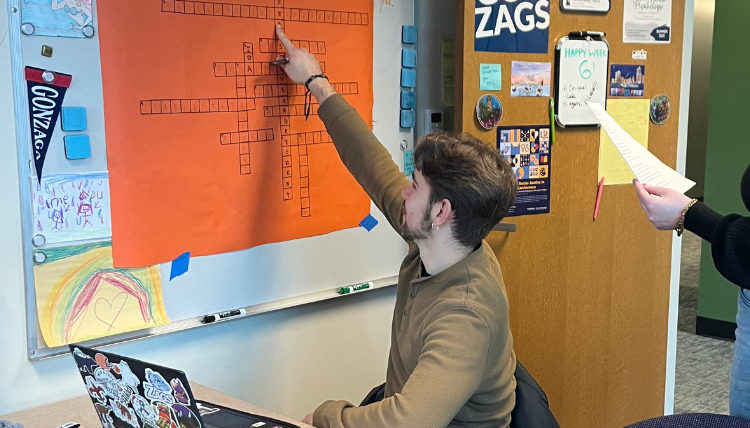
Students in Gonzaga University’s Master’s in Special Education program experience learning in dynamic, hands-on ways that go beyond traditional lectures. The program emphasizes active participation, allowing students to apply behavioral principles in real time through behavioral observations, data collection, and interactive review games. Students practice changing their own behavior as well as implementing strategies to support positive behavior change in others, gaining a deep understanding of the science of behavior through experience.
The curriculum is designed to foster critical thinking and problem solving, encouraging students to explore creative solutions to real-world behavioral challenges. From conducing functional behavioral assessments to designing individualized interventions, students engage with material in ways that makes learning practical and memorable. Collaborative projects, role-playing exercises, and small-group discussions ensure that students learn not only from instructors, but also from one another, building skills that are essential for professionally practice.
Some example include...
Behavior Change Project
Students practice implementing the principles of behavior analysis and change a behavior of their own! Students work closely with faculty to select appropriate interventions, identify principles of behavior, and graph using single case design to evaluate behavior change.
Review Activities
Students engage in a variety of review activities such as identifying principles in practice examples, providing personal examples, and matching games! The goal is for students to access the material in as many ways as possible to ensure maintenance of material all while making learning fun.
Research Practice
While in the program, students gain experience in research. They are given opportunities to conduct literature reviews, synthesize and expand on current research, collect and/or analyze data, and suggest opportunities for future areas of research.