

Why Study Neuroscience?
Studying neuroscience at Gonzaga allows students to explore the intricacies of the brain and nervous system, combining disciplines such as physiology, molecular biology, genetics, anatomy, psychology, biochemistry, physics, and computer science. This interdisciplinary field addresses fundamental questions of human existence and the mechanisms influencing behavior and cognition.
Students not only gain a profound understanding of life's biological and psychological aspects but also develop critical skills in problem-solving and research methodologies. This knowledge empowers graduates to contribute to advancements in neurological disorders, mental health, memory, and aging. Beyond professional gains, neuroscience enriches personal growth by providing profound insights into consciousness and the human experience, making it a rewarding academic pursuit at Gonzaga.
What You'll Study
The B.S. in Neuroscience at Gonzaga is an interdepartmental program which means students will take courses from all over the university including the departments of Biology, Chemistry & Biochemistry, Human Physiology, Physics, and Psychology. This interdisciplinary approach will allow students to gain skills from a diverse set of STEM and social science fields. Some of the topics that will be explored in the curriculum include:
- Foundational Concepts – Students will begin their studies by taking courses in introductory biological and psychological concepts, inorganic and organic chemistry, genetics, and physics.
- Advancing Knowledge and Expertise – In their major specific courses students will explore the field with in-depth studies in cellular neurophysiology, systems and behavioral neuroscience, neuroanatomy, and cognitive neuroscience.
- Integrative Learning – Neuroscience majors will develop and apply skills in classes that cover statistics, scientific writing, reading primary literature, grant development along with opportunities to apply these skills in independent research. Students will also integrate what they are learning in the liberal arts through the university core with their scientific studies to explore how neuroscience shapes society.
- Tailored Electives – After building a strong basis of understanding students will be able to tailor their studies to several different areas including cellular and molecular, physiological and anatomical, philosophical, computational and theoretical, and behavioral and cognitive or design their own path by combining any of the courses that interests them.
What Can I Do with a Neuroscience Degree?
A Neuroscience degree from Gonzaga opens diverse career paths, including research in biotech, pharmaceuticals, counseling, clinical psychology, and medicine. Graduates can pursue academia, exploring behavioral, cognitive, computational, and molecular neuroscience, as well as AI, biomedical engineering, pharmacology, and clinical neuroscience. Beyond the lab and clinic, a neuroscience degree paves the way for futures in science communication, education, and policy-making, where translating complex ideas into actionable insights can influence public health and wellness strategies. For those passionate about unraveling the mysteries of the mind, a Neuroscience degree provides scientific rigor, critical thinking skills, and the chance to contribute to groundbreaking discoveries for human health and understanding.
Research Opportunities?
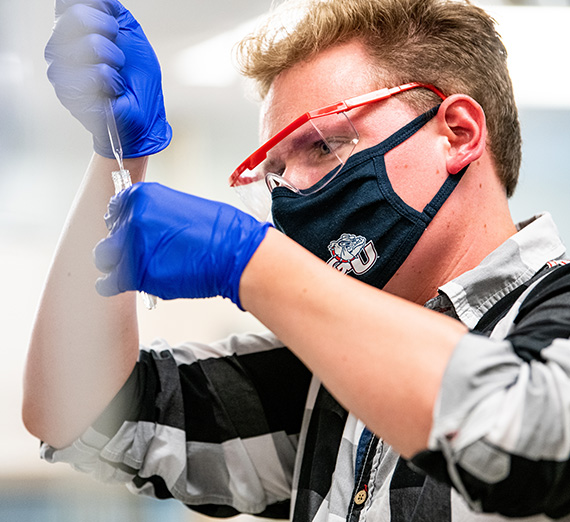
Gonzaga has a long history of supporting undergraduate research opportunities in the sciences. Neuroscience faculty offer students a chance to engage in a broad range of research opportunities and gain valuable experience as they apply techniques working alongside faculty. Explore faculty research interests here.
There are also many competitive off-campus summer research opportunities across the nation at major research universities. Explore off-campus summer research opportunities here.
Closer to home, Gonzaga undergrads have been welcome at Washington State University's Spokane campus for research opportunities as well.
Why GU?
Choosing Neuroscience at GU provides a unique educational blend, integrating rigorous scientific study with Jesuit values in humanistic education. The program's holistic approach explores not only the intricacies of the brain but also its ethical, philosophical, and societal implications. GU's Human Physiology, Psychology, and Biology departments offer a strong interdisciplinary foundation, known for student-centered research and dedicated faculty.
The program's collaboration with the University of Washington School of Medicine and proximity to Washington State University’s medical campus enhance opportunities for hands-on research and clinical exposure. Studying neuroscience at GU means joining a community that values academic excellence, ethical leadership, and social justice. It's a journey aligning with values and aspirations, making a meaningful difference in the world.
Program Questions?
Please contact: Kevin Measor, Ph.D.
Director, Neuroscience
(509) 313-6650
measor@gonzaga.edu